Today, let’s start with a basic introduction to yolk sac tumor to help everyone gain a fundamental understanding.
What is a Yolk Sac Tumor?
Yolk sac tumor, also known as endodermal sinus tumor, is a highly malignant germ cell tumor. It is a relatively rare cancer with strong invasiveness but responds well to treatment. Although it is a rare malignant tumor, it primarily affects children and adolescents. In fact, it is one of the most common malignant testicular tumors in male infants under 2 years old.
Is Yolk Sac Tumor Cancer?
Let’s get straight to the answer: Yes, yolk sac tumor is a malignant tumor, which is what people commonly refer to as “cancer”.
I once asked the chief surgeon who operated on my child, Tubao, whether a yolk sac tumor is cancer. He explained that in adults, it is called embryonal carcinoma, which is clearly cancer. In children, it is classified as a malignant tumor, but the prognosis for children is far better than that for adults.
Yolk sac tumor originates from the yolk sac tissue during embryonic development. In the early stages of human development, the yolk sac is responsible for supplying nutrients to the embryo. If these cells “go astray” during development and proliferate uncontrollably, they will form a tumor.
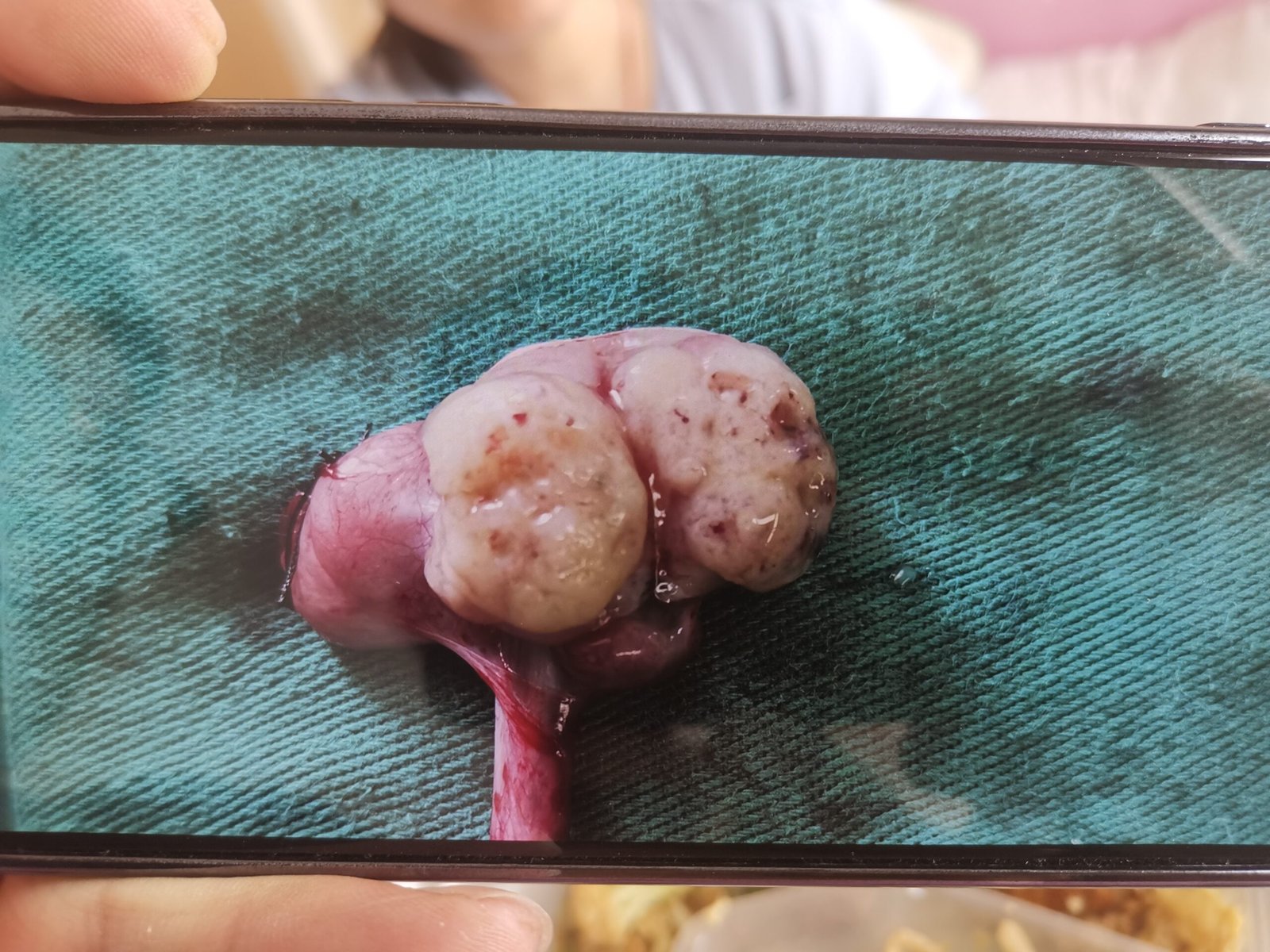
Common Sites of Yolk Sac Tumor & Key Characteristics
1. Common Affected Parts
Based on the cases of more than 300 patients I have encountered, known sites of yolk sac tumor include the testicles, ovaries, vagina, mediastinum, intracranial cavity, sacrococcygeal region, peritoneum, maxillofacial area, and pelvic cavity. As mentioned earlier, children and adolescents are the high-risk groups.
2. Symptomatology & Metastasis Risk
In the early stages, there are usually no obvious symptoms. Tubao experienced no pain or discomfort whatsoever. We only discovered the problem when Tubao’s father noticed that his testicles were of different sizes during a bath. That was the first time we had ever heard the name “yolk sac tumor”.
However, this tumor grows rapidly. If not detected in time, it may spread to other parts of the body. The retroperitoneal space is a common site for local metastasis, while the lungs are the preferred site for distant metastasis.
3. Prognosis with Standard Treatment
It sounds scary, right? But don’t lose hope. The prognosis is excellent with early and standardized treatment. Good results can be achieved through surgical resection, chemotherapy, and other treatments. For example, after standardized treatment, Tubao’s 5-year survival rate can reach as high as 90%.
Regular Follow-up Examinations
For patients with stage I testicular yolk sac tumor, like Tubao, chemotherapy is not required after surgical resection, and regular observation is sufficient. The specific follow-up plan is as follows:
- First 3 months after surgery: Check alpha-fetoprotein (AFP) every 2 weeks.
- 3 months to 1 year after surgery: Check AFP once a month; perform B-ultrasound every 3 months; conduct low-dose lung CT every 6 months.
- 1 to 2 years after surgery: Check AFP every 2-3 months; perform B-ultrasound and low-dose lung CT every 6 months.
Final Reminder
In conclusion, if you notice any abnormalities in your body or your child’s body, such as lumps, please seek medical attention immediately. Early detection and early treatment are the keys to overcoming yolk sac tumor, and we wish everyone good health!